

01
Refrigerators
Defrost and anti-condensation heating around evaporators, drains and door frames, built to fit tight cavity geometries.
Custom heating elements · OEM / ODM

OEM / ODM heating elements
Custom heating elements, built to your drawing.
Aluminum foil, tubular, silicone PTC, mica and heating wire, specified by voltage, power, size, material, temperature and leads.
01Product families
Choose a family, then define voltage, power, size, material, temperature and leads. Every element is quoted from your drawing.
02Applications
Refrigerators, cold cabinets, air conditioning, bathroom products and equipment heating, each with its own space, temperature and lead constraints.
Defrost and anti-condensation heating around evaporators, drains and door frames, built to fit tight cavity geometries.
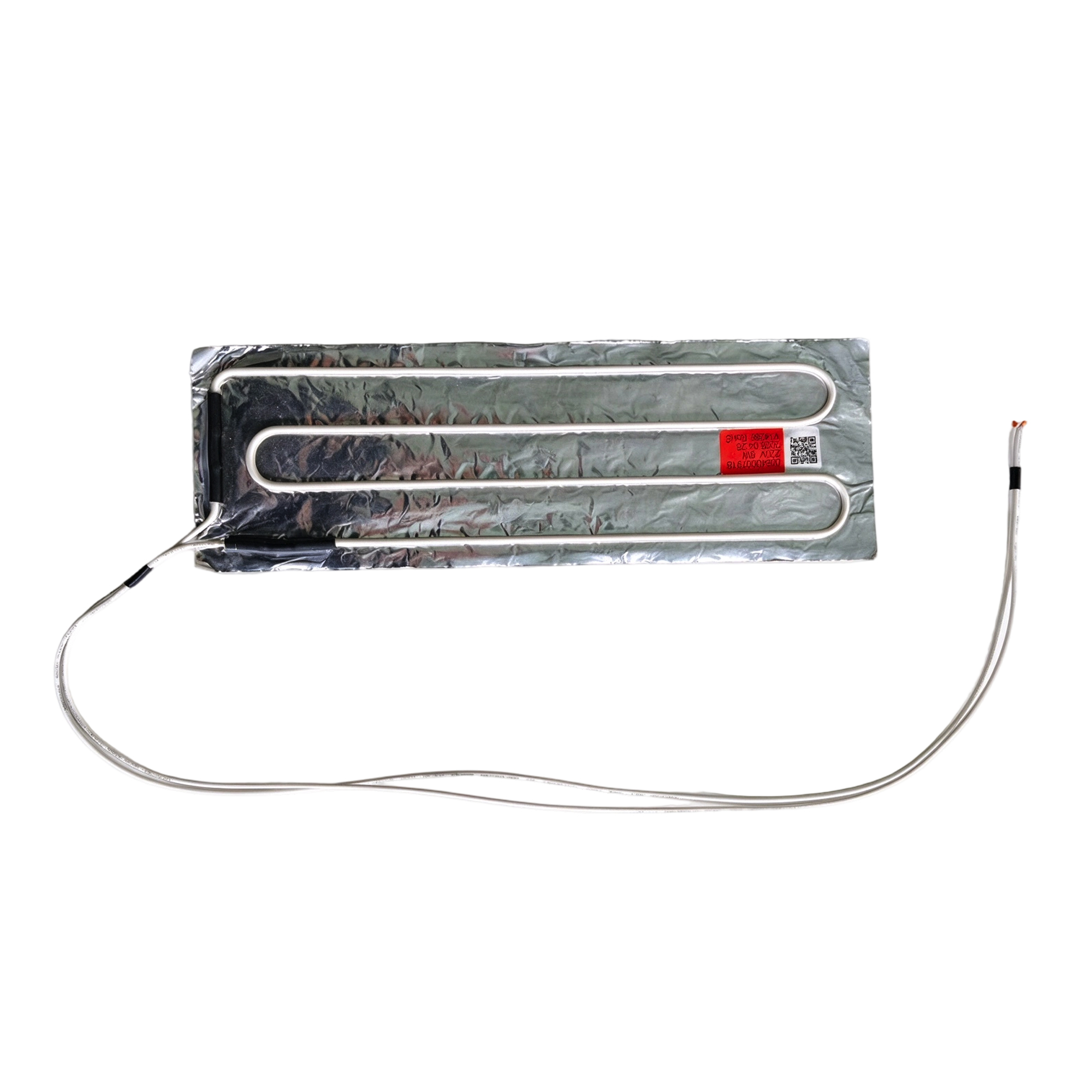
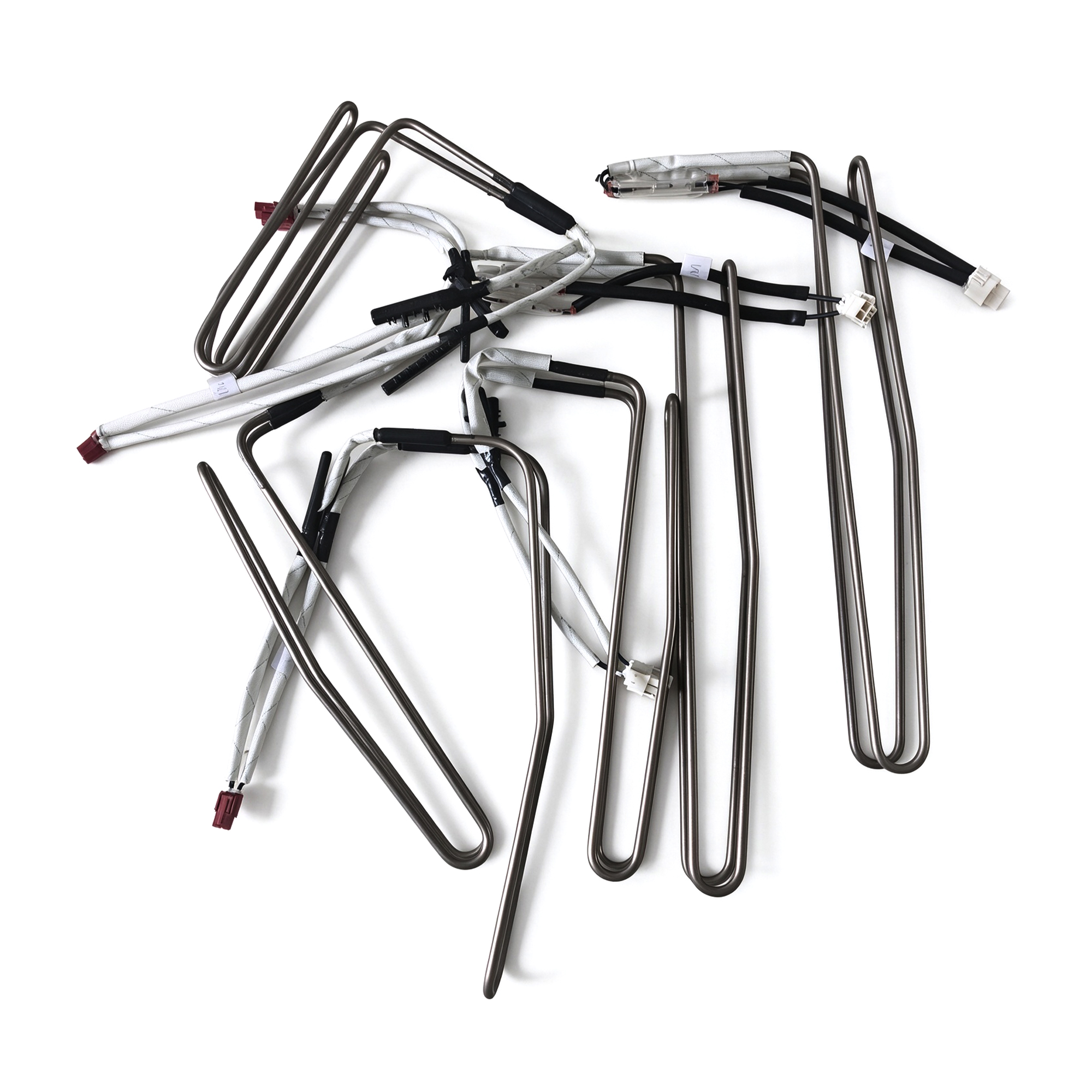
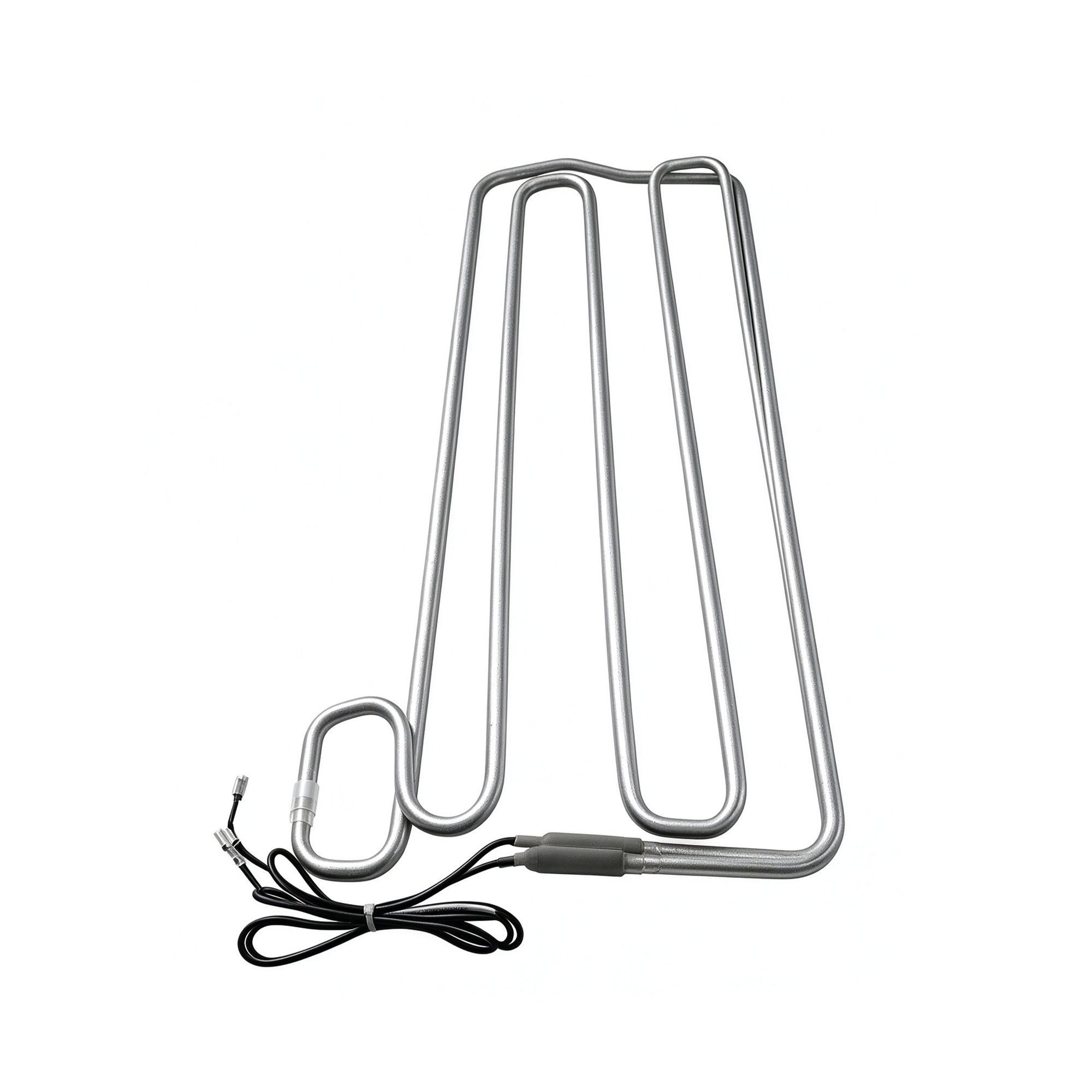
Heating elements for low-temperature enclosures, where element shape, sheath material and lead routing matter.
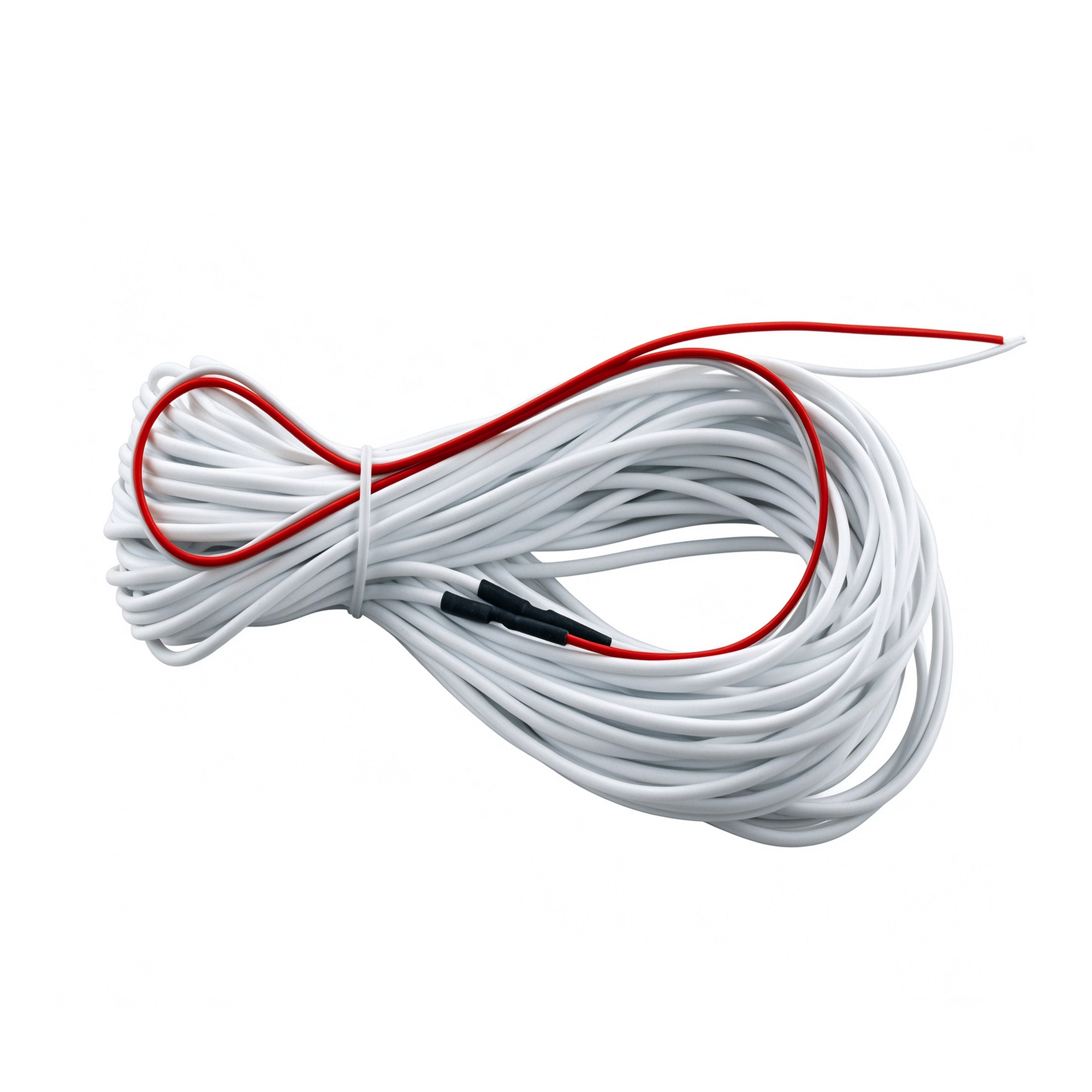
Heating for indoor and outdoor units, including drain and base-pan areas and constant-temperature modules.
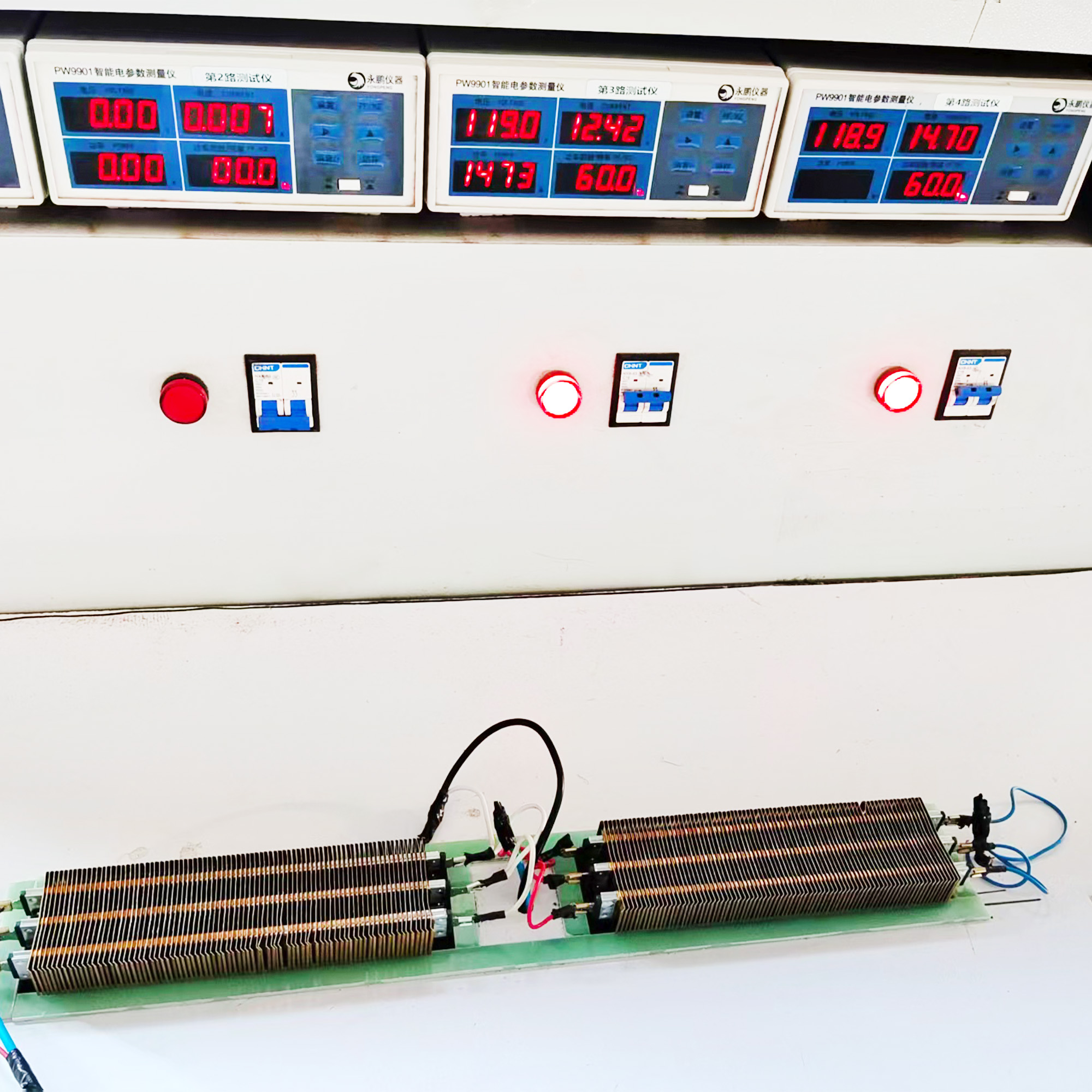
Low-profile heating for panels and surfaces where thin construction and clean lead exits are needed.
Custom heaters for enclosures, tooling and small equipment, from flat mica plates to flexible heating wire.
03Engineering
Eight parameters define a heating element. Give us what you have; drawing review closes the gaps before any sample is made.
| Parameter | What to provide |
|---|---|
| 01Voltage | Supply voltage, for example 12, 24, 220 or 230 V |
| 02Power | Total wattage, or W/m for heating wire |
| 03Size & shape | Overall dimensions, bend pattern or die-cut outline |
| 04Material | Sheath, foil, mica or encapsulation preference |
| 05Operating temperature | Working range and any maximum surface limit |
| 06Lead configuration | Wire type, length, termination or connector |
| 07Drawing | Drawing, sample photo or cavity layout if available |
| 08Order volume | Expected sample, trial and annual quantities |
04Manufacturing
Based in Ningguo, Anhui, Tianlin has built heating elements since 2019. Foil, tubular, PTC, mica and wire products share one site, one engineering team and one test area.

05Quality lab
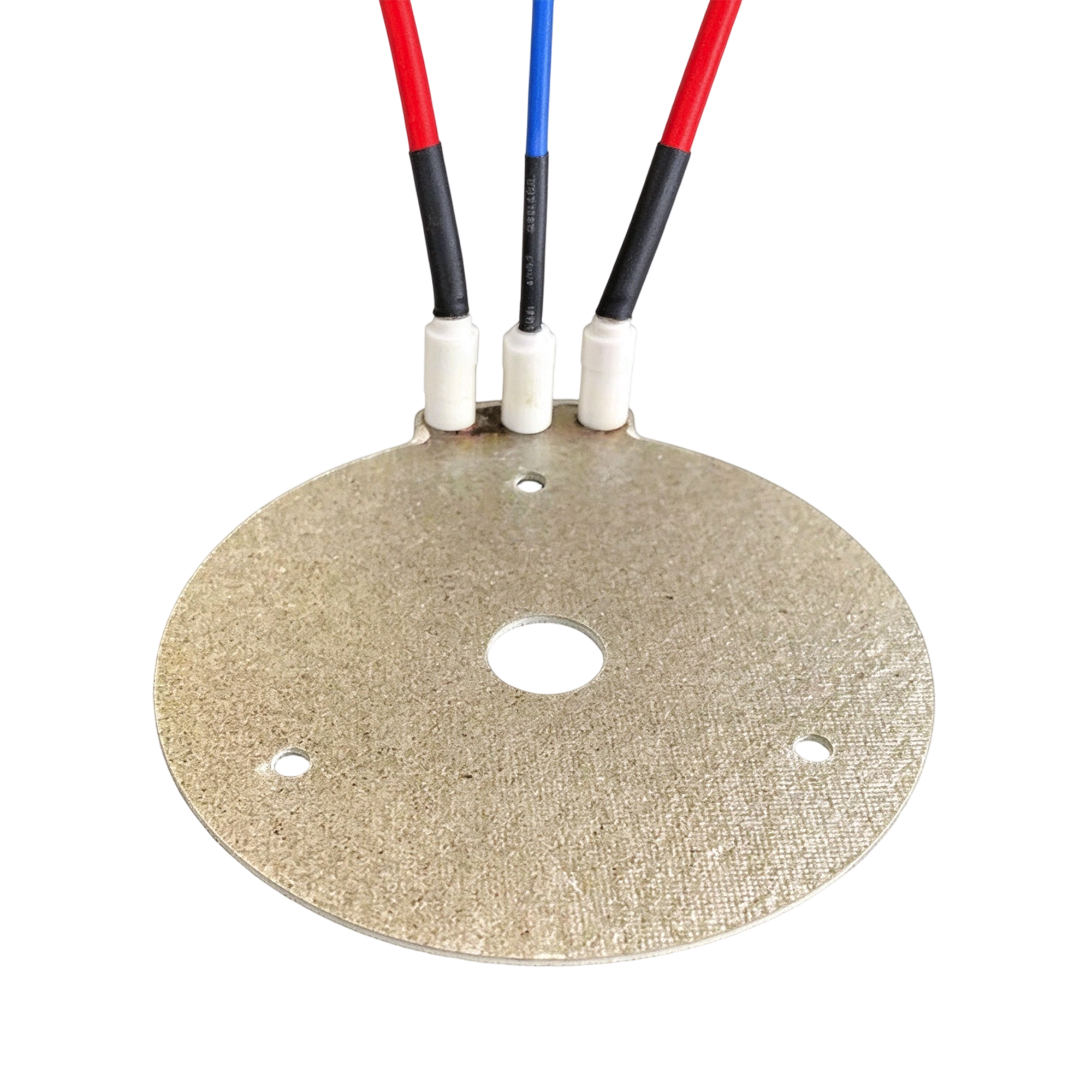
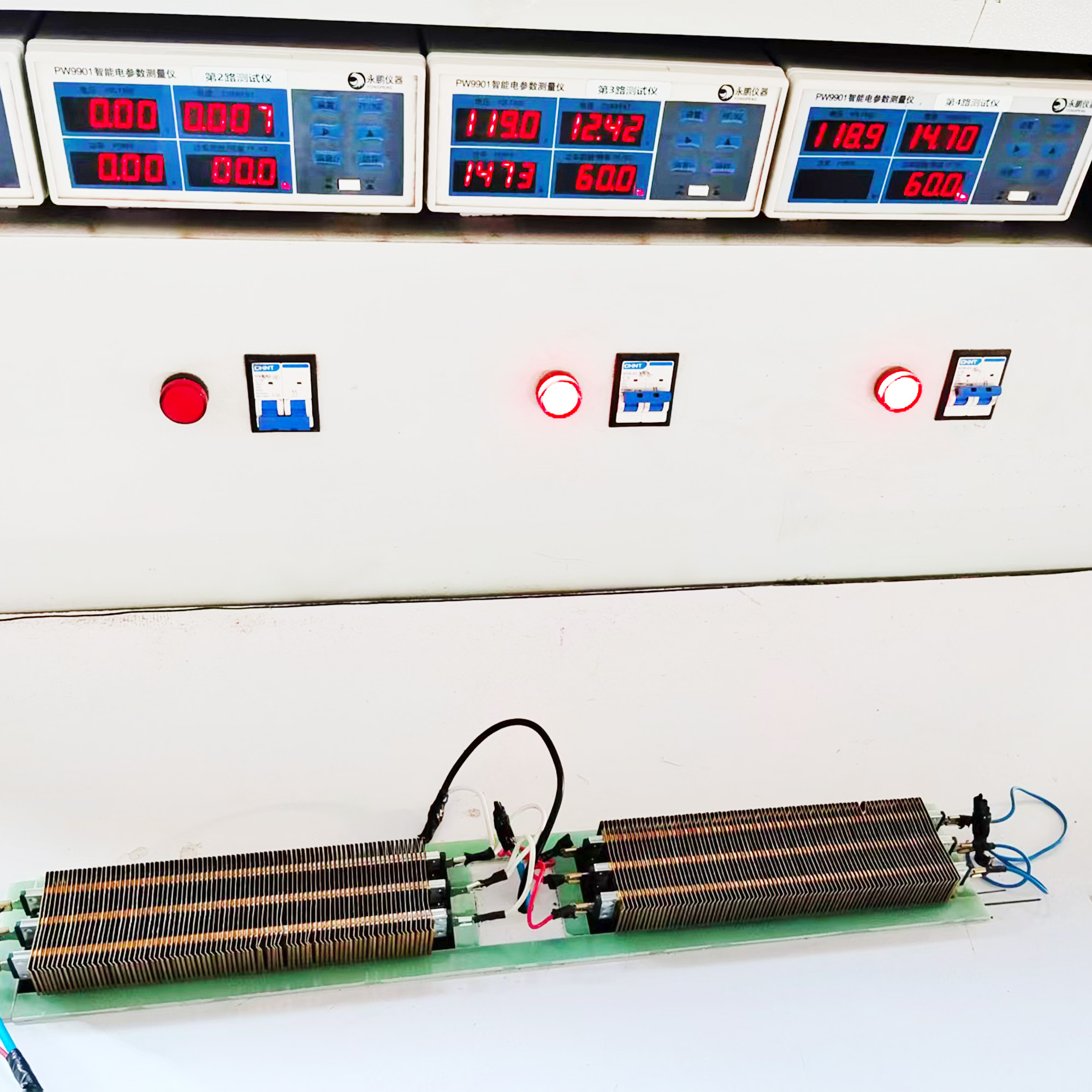
Our test area reads electrical values from elements under load, so the sample you receive can be checked against the figures agreed in the drawing.
Elements are powered on separate test channels while voltage, current, power and power factor are read from dedicated meters.
Each channel has its own breaker and indicator, so several elements can be tested side by side.
Test points for your project are set during drawing review and applied to the sample.
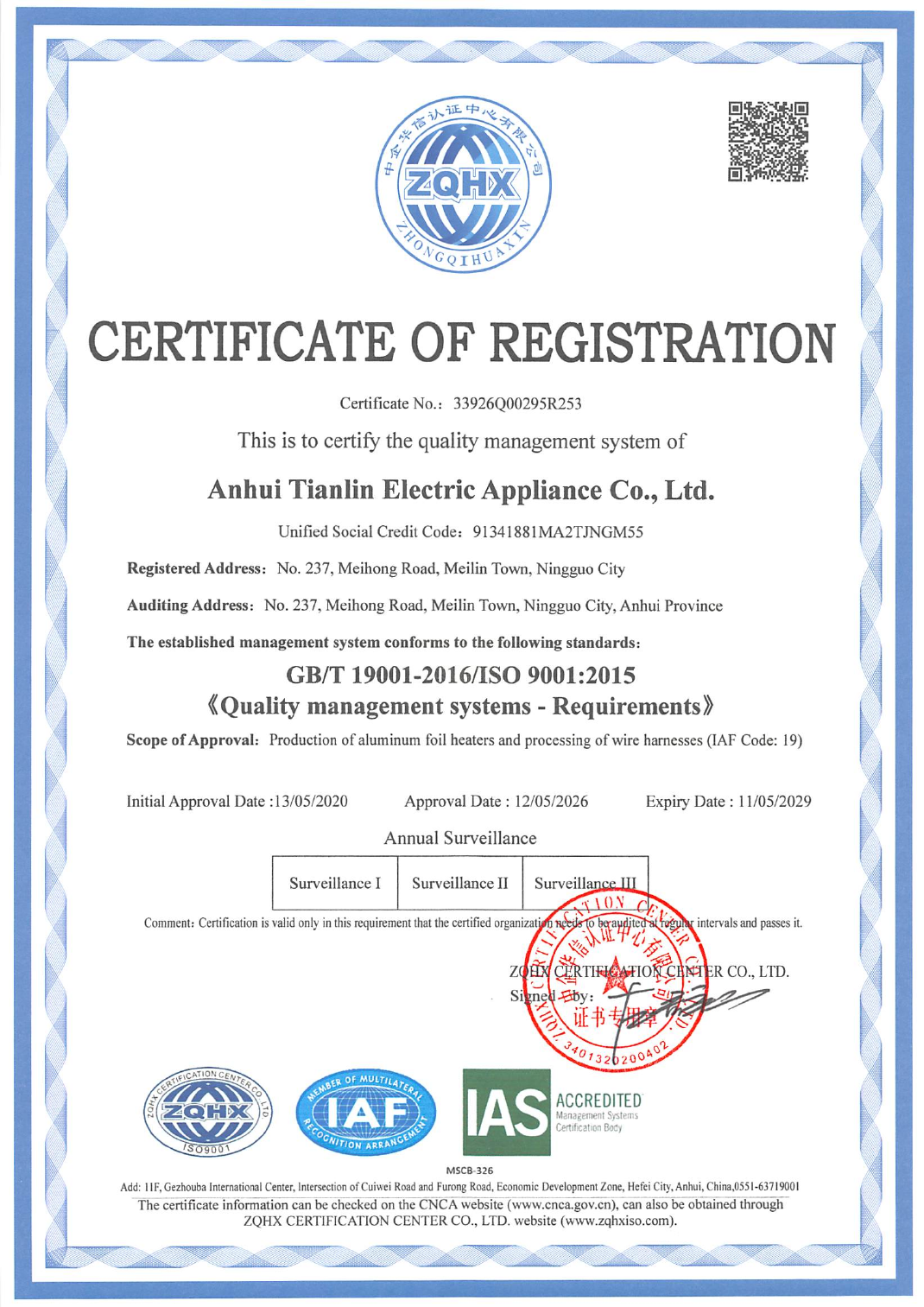
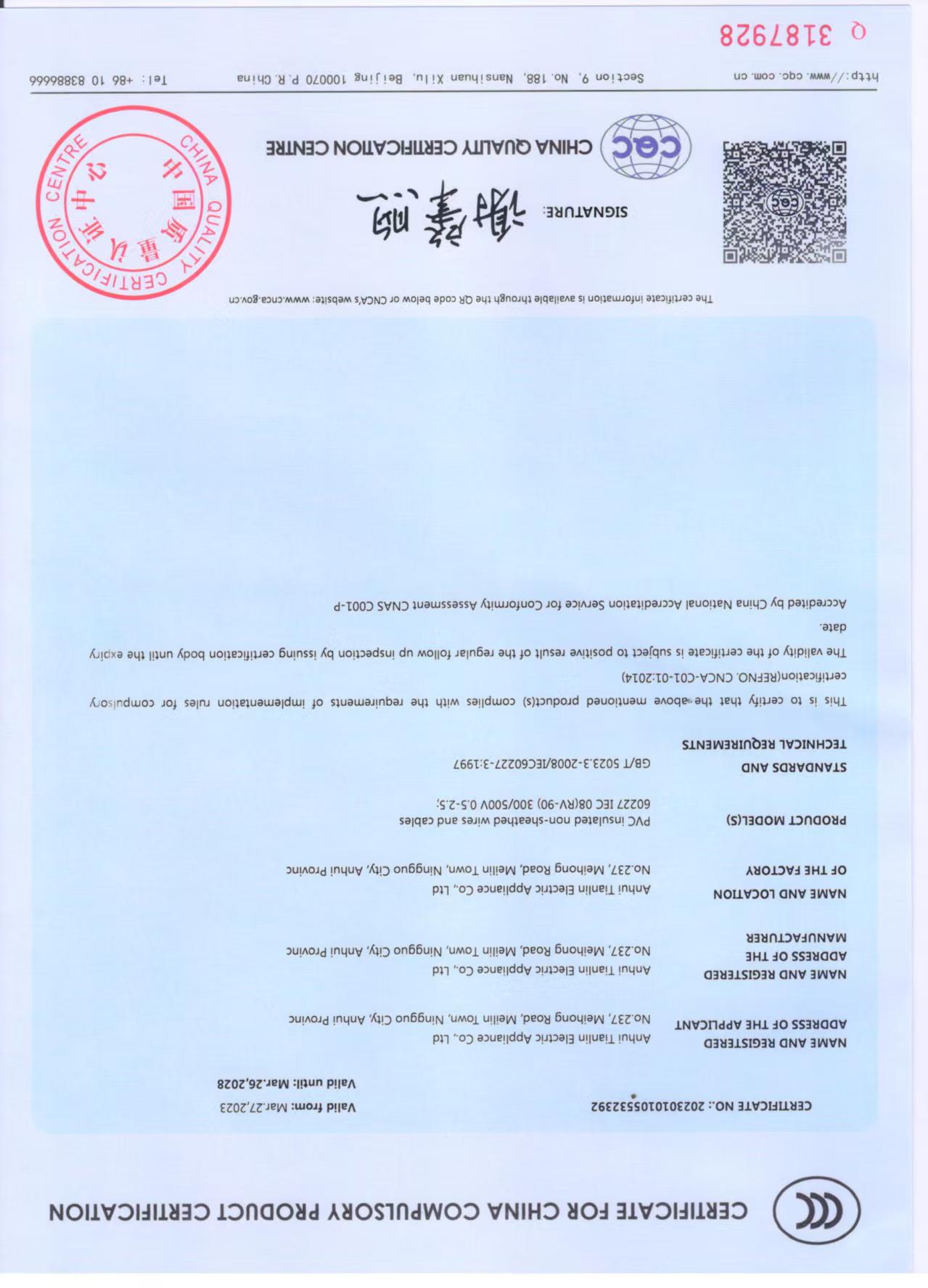
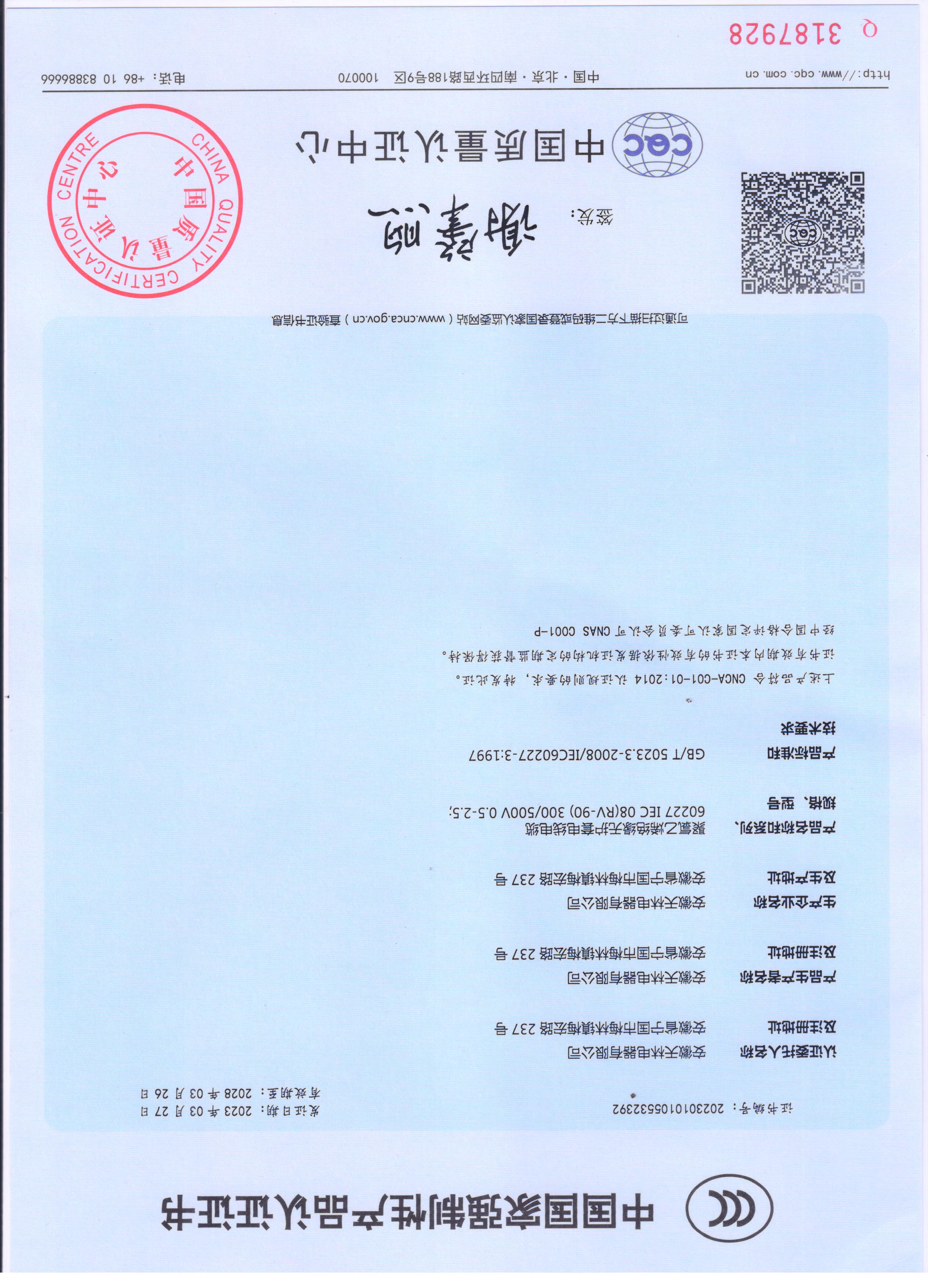
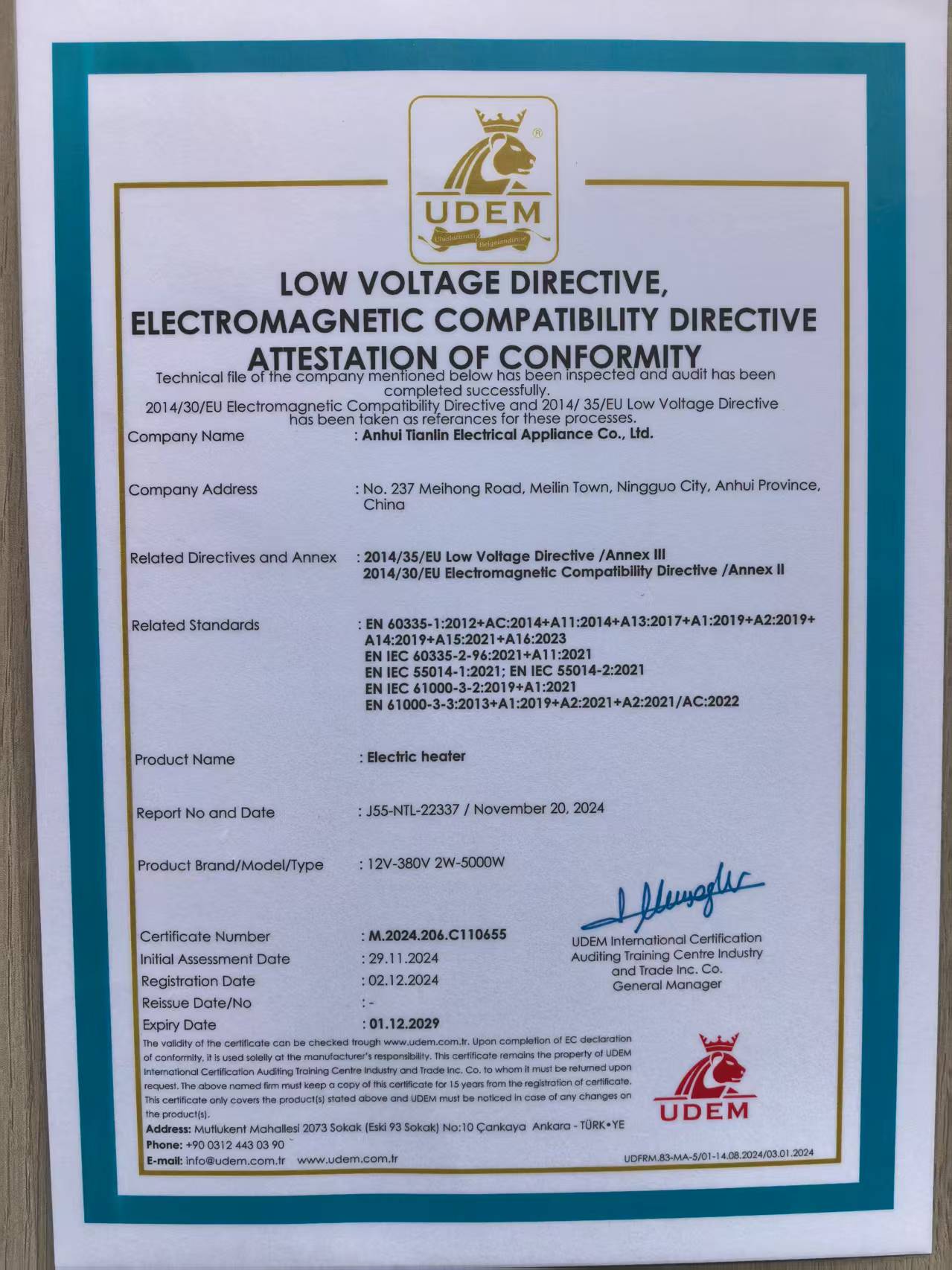
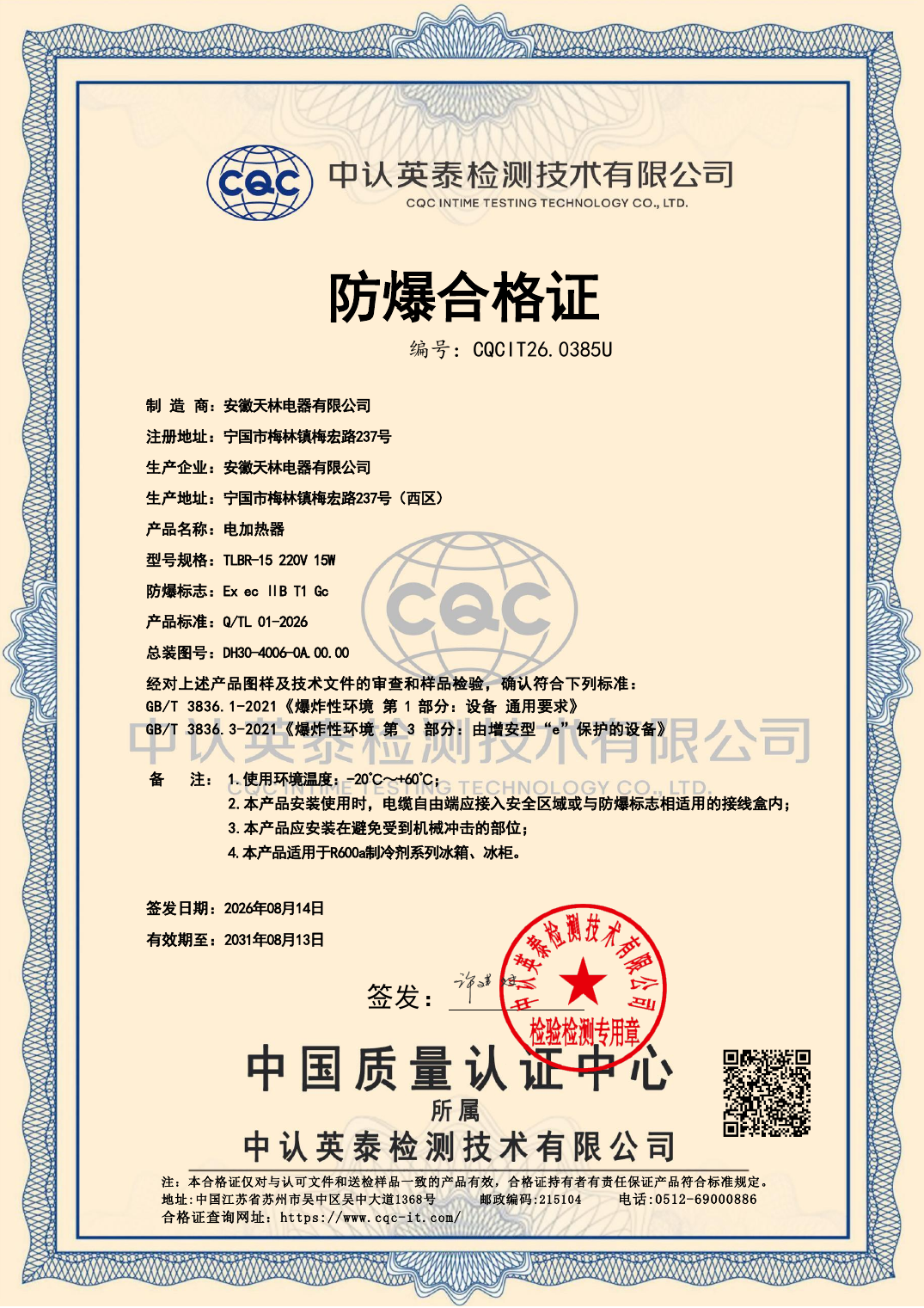
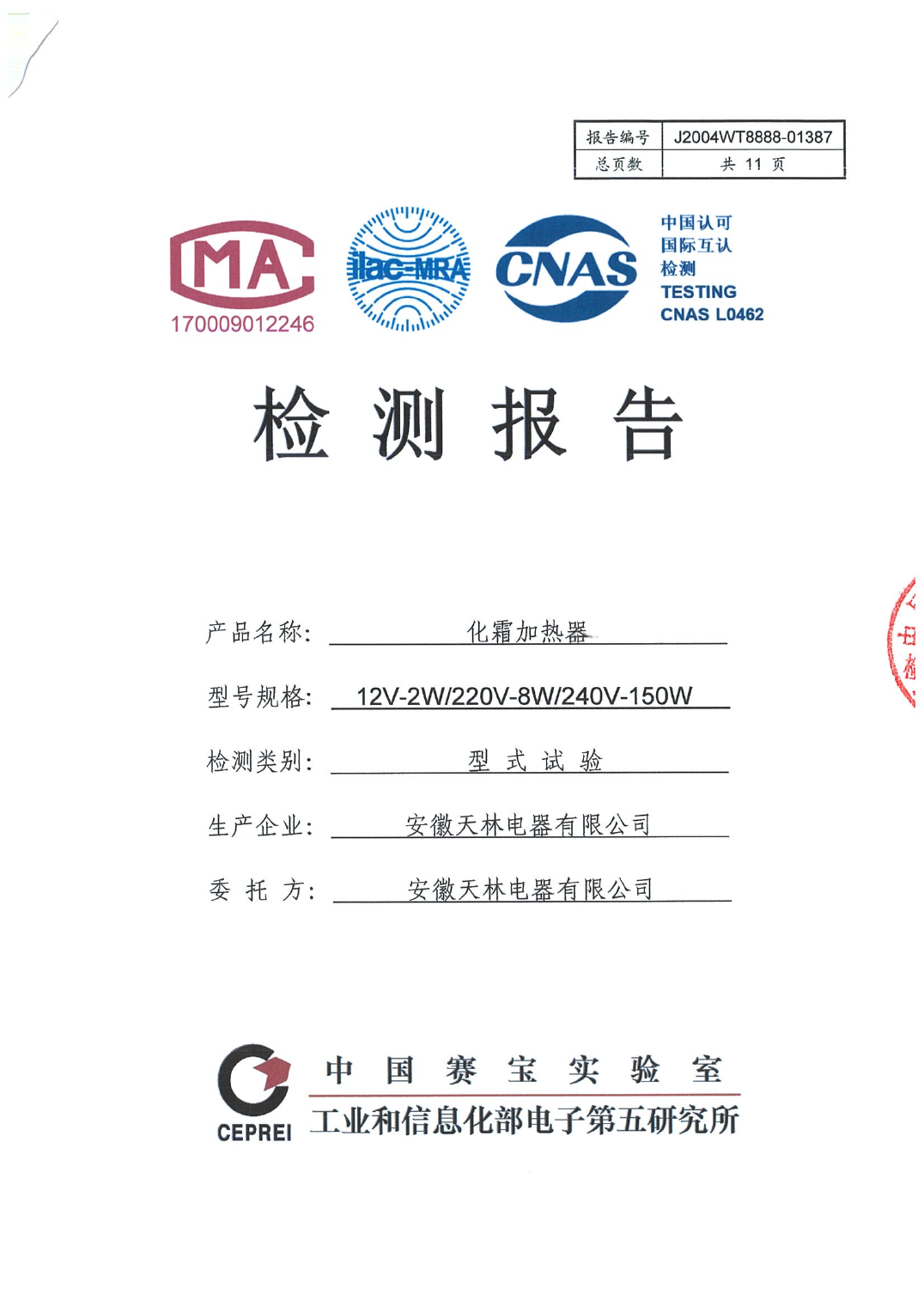
06Certificates
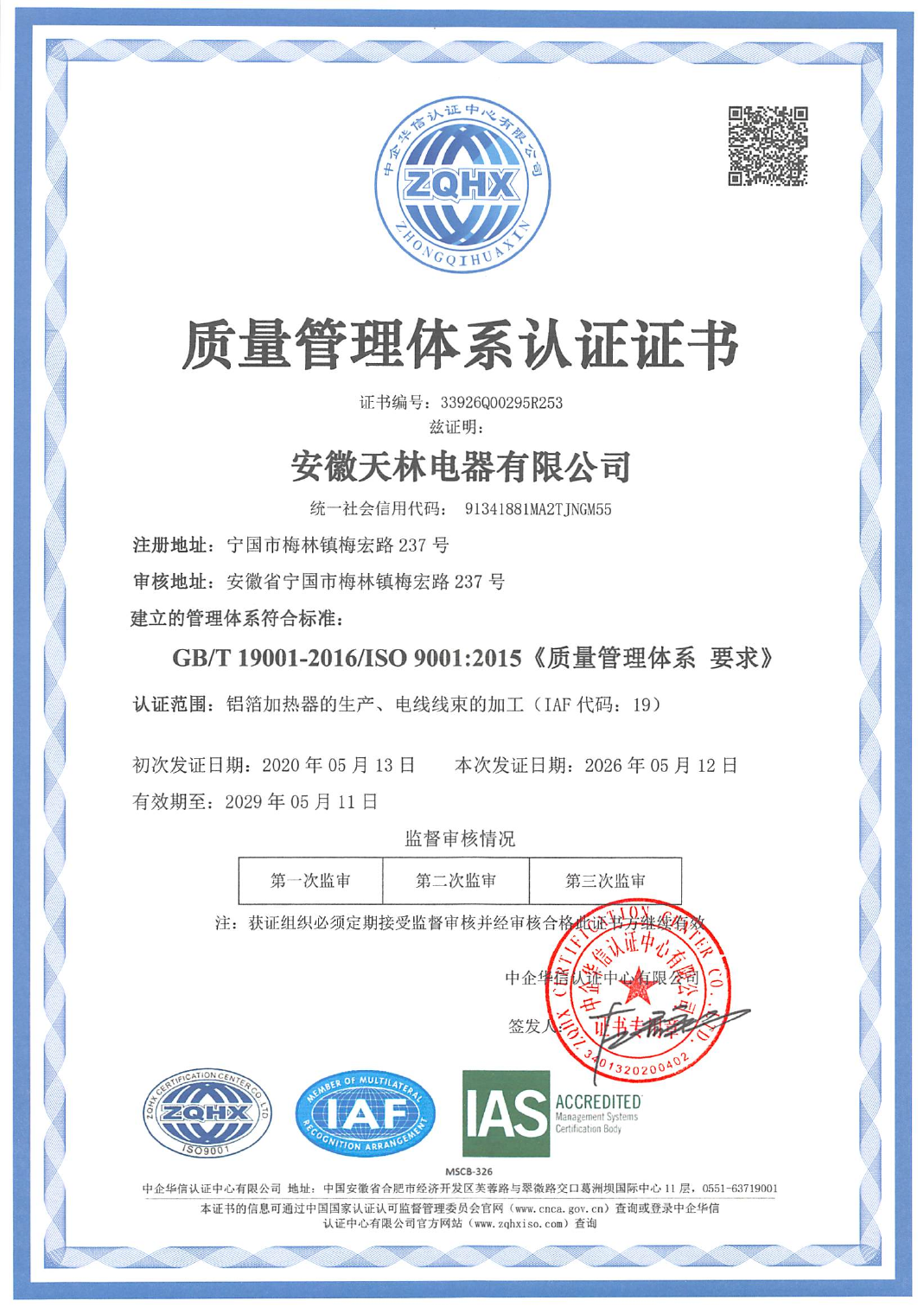
Each certificate is presented as its own portrait page so the text can be read, not as a collage.
07Clients
Logos are shown only where the customer has been supplied to us for publication.










08Cooperation process
Five steps, each with a clear output, so both sides know what is agreed before the next one starts.
Share voltage, power, size, material, temperature, leads and volume.
Engineering checks your drawing against the supplied product families.
A sample build is agreed from the reviewed drawing and parameters.
Samples are measured against the agreed electrical and dimensional points.
Approved specifications move into batch production.
09FAQ
Customization, MOQ, sampling, lead time and testing, answered plainly.
Yes. Send a drawing, a sample photo or the cavity layout together with voltage, power, material, operating temperature and lead details. Engineering reviews it against the six product families and replies with questions or a proposed specification.
Voltage, power, size and shape, material, operating temperature, lead configuration, drawing and expected order volume. Missing items can be clarified during drawing review.
Minimum order quantity depends on the product family, material and tooling needed. Tell us your trial and annual volume in the RFQ and we confirm the MOQ in our reply.
Yes. Samples are arranged after drawing review, once the specification is clear. Use Request a Sample to start.
Lead time depends on design complexity, materials and order volume. We give a schedule after drawing review, not before.
Our test area uses multi-channel power parameter meters to read voltage, current and power on elements under load. The test points for your project are agreed during drawing review.
Certificate scans are being prepared for publication on the Certificates page. Contact us to discuss the documents your supplier review requires.